Age of the Sauropods
The Age of the Sauropods – Very Large Dinosaurs. Note the numerous marine creatures – Belemnties, Fish and Crayfish.
At the beginning of the Jurassic Period Pangaea began shifting into two landmasses, Gondwana and Laurasia. This caused the climate to change from dry to humid and once again large rainforests dominated the landscape. The Jurassic was ruled by the dinosaurs. The plated Stegosaurus and the 85 ft Brachiosaur both roamed the earth at this time. They were giants. The first birds appeared and mammals emerged.
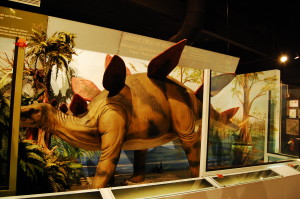
The Stegosaurus was a large, heavily built, herbivorous quadruped that had bony spikes on its back. They were not sharp but instead were probably used for defense in another way or to regulate the creature’s body heat. Stegosaurus has been found throughout North America and Europe.
Marine life was still thriving and many fossils we find from this time are from creatures that lived in the oceans.
One of the most common marine fossils from this time period was the Belmnite. It was similar in appearance to squid and had an ink sac. They did not have tentacles, only arms. They were efficient carnivores that caught small fish and were meals for larger marine reptiles.
The Lycoptera is a genus of fish that lived during the Jurassic period. There are many fossils found of this fish. The Lycoptera were small fresh water fish that fed on Plankton and had numerous tiny teeth. This is a fossil of a crayfish that lived during the Jurassic period. They survived several extinctions and are similar to ones we enjoy today.
The Brachiosaurus was a sauropod dinosaur that lived during the Jurassic period. It had a long neck and small head but was once thought to be the largest dinosaur. This Brachiosaur is the size of a 3 yrs. old and stands around 17 ft.
Gastroliths are stones that some dinosaurs including the Brachiosaurus, would keep in their gastrointestinal tract. They were used to grind food and make it easier for the creature to digest. Modern Crocodiles still use this method today.
This is a pine cone from the Jurassic period. This small pine cone gives scientists a large piece of evidence into what the world looked like during this period.
The Sauropod vertebrate bones come from southern Utah. The vertebrates here were cut in half to show the cellular structure of the vertebrate.
The Corprolite or “dinosaur poop” in the diorama was found near a brachiosaurus and the largest weighs around 37 ½ lbs. Analysis of the Corprolite reveals pine tree needles were part of the Brachiosaur diet.
This is a large femur bone that is over 5 ft long from a Diplodochus. A Diplodochus was a Sauropod and very similar to the Brachiosaurus. By observing this large femur bone you can imagine the size of the Diplodochus that it came from.
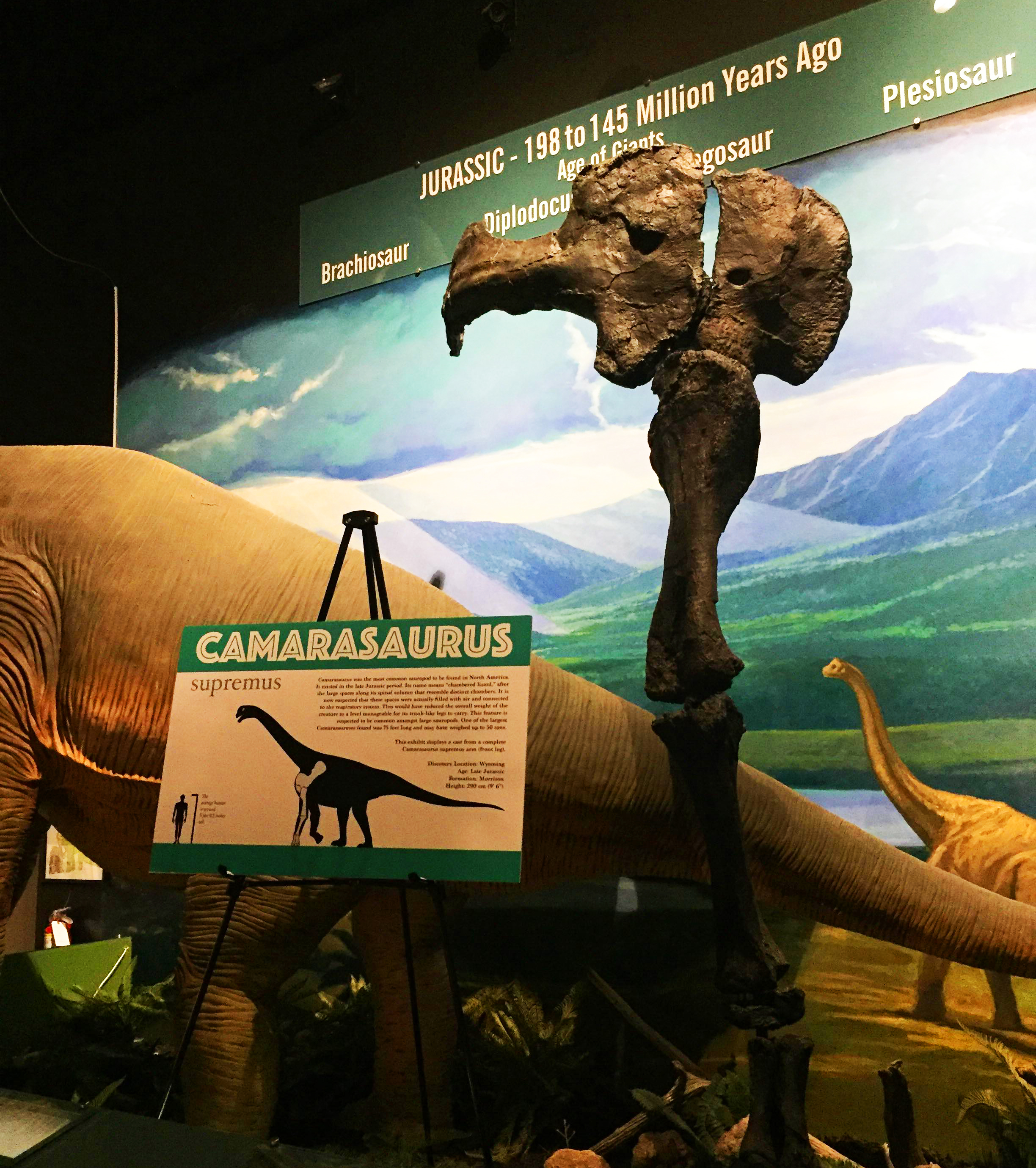
9ft Camarasaurus Leg
You cannot help but see the newest addition to the Jurassic Sauropod exhibit at the Naranjo Museum. This 9-foot tall leg and shoulder blade belongs to Camarasaurus, one of the most common sauropods (long-neck dinosaurs) in North America.

Graphics by: Eddie Martin of Angelina College
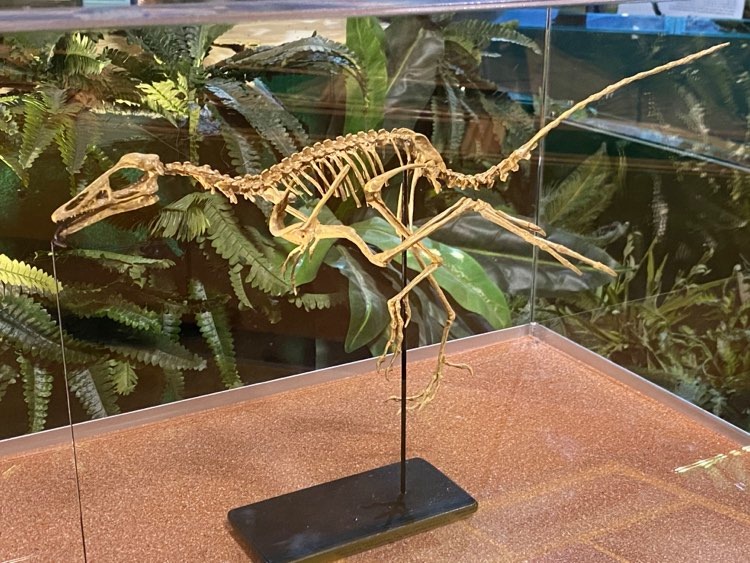
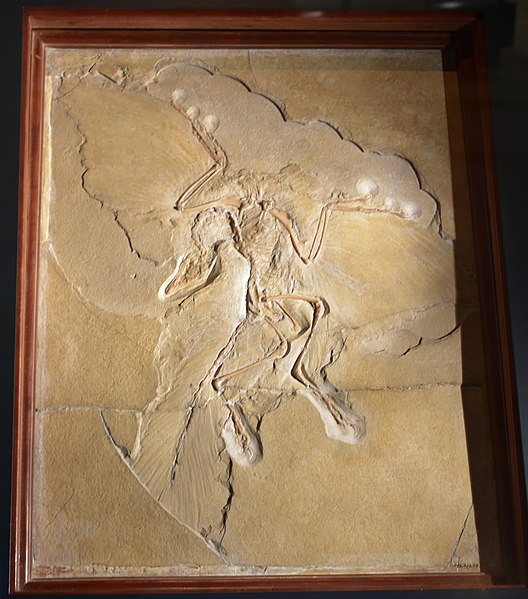
Archaeopteryx
Walk by the new archaeopteryx exhibit and you can hear what they might have sounded like in the late Jurassic.
Archaeopteryx, genus of feathered dinosaur that was once thought to be the oldest known fossil bird. The specimens date to approximately 150 million years ago, during the Late Jurassic Epoch (163.5 million to 145 million years ago), and all were found in the Solnhofen Limestone Formation in Bavaria, Germany, starting in 1861. However, late 20th- and early 21st-century discoveries of other birdlike fossils of similar age, including Xiaotingia zhengi from the Liaoning deposits in China, have prompted several paleontologists to call for the reclassification of Archaeopteryx as a dinosaur.